

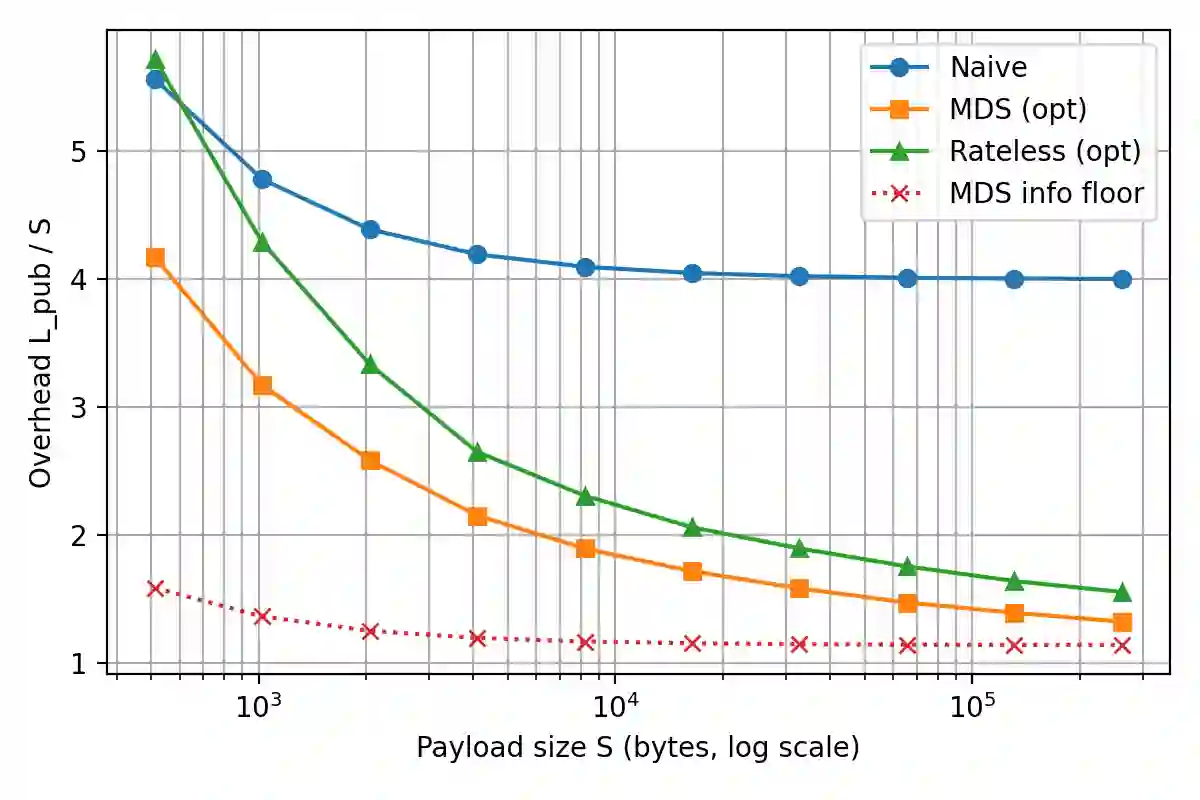
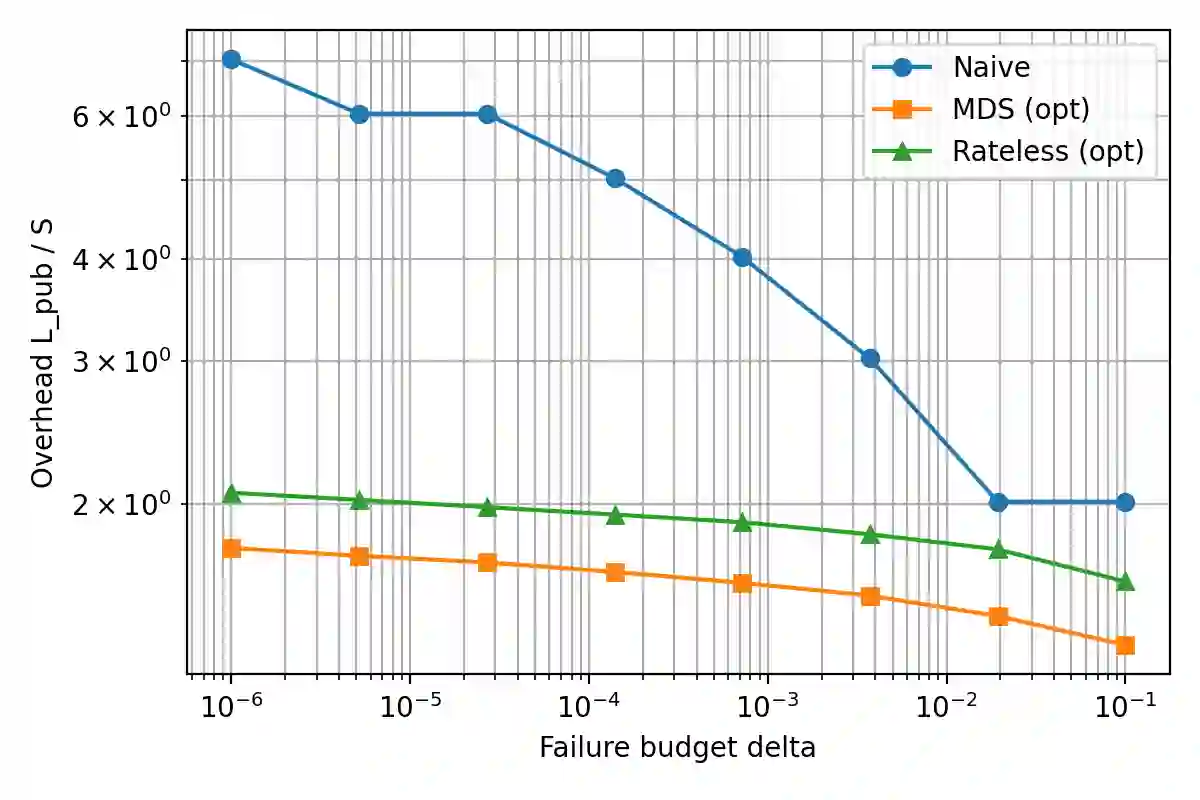
Modern blockchains increasingly adopt multi-proposer (MCP) consensus to remove single-leader bottlenecks and improve censorship resistance. However, MCP alone does not resolve how users should disseminate transactions to proposers. Today, users either naively replicate full transactions to many proposers, sacrificing goodput and exposing payloads to MEV, or target few proposers and accept weak censorship and latency guarantees. This yields a practical trilemma among censorship resistance, low latency, and reasonable cost (in fees or system goodput). We present Sedna, a user-facing protocol that replaces naive transaction replication with verifiable, rateless coding. Users privately deliver addressed symbol bundles to subsets of proposers; execution follows a deterministic order once enough symbols are finalized to decode. We prove Sedna guarantees liveness and \emph{until-decode privacy}, significantly reducing MEV exposure. Analytically, the protocol approaches the information-theoretic lower bound for bandwidth overhead, yielding a 2-3x efficiency improvement over naive replication. Sedna requires no consensus modifications, enabling incremental deployment.
翻译:现代区块链日益采用多提议者(MCP)共识机制,以消除单一领导者瓶颈并提升抗审查能力。然而,仅靠MCP本身并未解决用户应如何向提议者分发交易的问题。目前,用户要么简单地将完整交易复制给多个提议者,从而牺牲有效吞吐量并使交易负载暴露于MEV风险之下;要么仅面向少数提议者发送交易,但需承受较弱的抗审查性和延迟保证。这在实际中形成了抗审查性、低延迟与合理成本(在费用或系统有效吞吐量方面)之间的三难困境。本文提出Sedna,一种面向用户的协议,它采用可验证的无速率编码取代简单的交易复制。用户将寻址后的符号包私有地分发给提议者子集;一旦有足够符号被最终确定以完成解码,交易即按确定性顺序执行。我们证明Sedna能保证活跃性及\emph{解码前隐私性},显著降低MEV暴露风险。分析表明,该协议逼近带宽开销的信息论下界,相比简单复制方案实现2-3倍的效率提升。Sedna无需修改共识层,支持渐进式部署。




相关内容



 微信扫码咨询专知VIP会员