

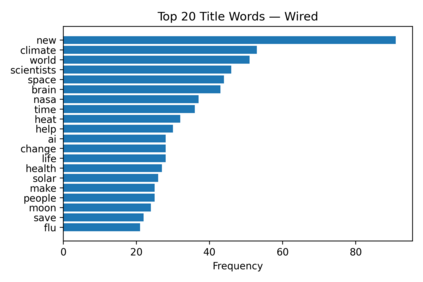
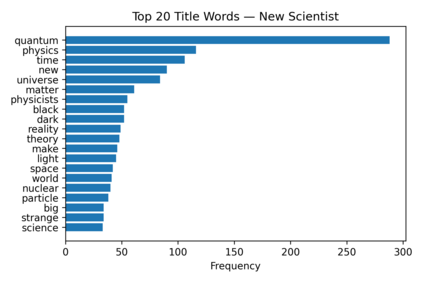
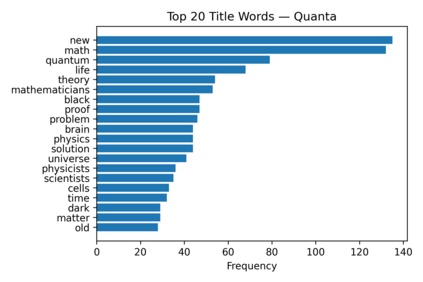
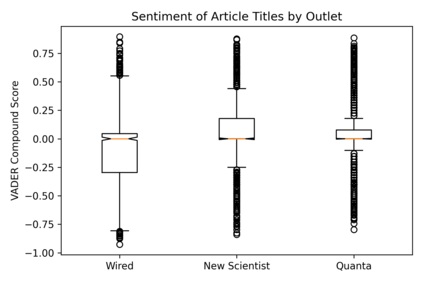
While traditionally not considered part of the scientific method, science communication is increasingly playing a pivotal role in shaping scientific practice. Researchers are now frequently compelled to publicise their findings in response to institutional impact metrics and competitive grant environments. This shift underscores the growing influence of media narratives on both scientific priorities and public perception. In a current trend of personality-driven reporting, we examine patterns in science communication that may indicate biases of different types, towards topics and researchers. We focused and applied our methodology to a corpus of media coverage from three of the most prominent scientific media outlets: Wired, Quanta, and The New Scientist -- spanning the past 5 to 10 years. By mapping linguistic patterns, citation flows, and topical convergence, our objective was to quantify the dimensions and degree of bias that influence the credibility of scientific journalism. In doing so, we seek to illuminate the systemic features that shape science communication today and to interrogate their broader implications for epistemic integrity and public accountability in science. We present our results with anonymised journalist names but conclude that personality-driven media coverage distorts science and the practice of science flattening rather than expanding scientific coverage perception. Keywords : selective sourcing, bias, scientific journalism, Quanta, Wired, New Scientist, fairness, balance, neutrality, standard practices, distortion, personal promotion, communication, media outlets.
翻译:暂无翻译




相关内容


 微信扫码咨询专知VIP会员