

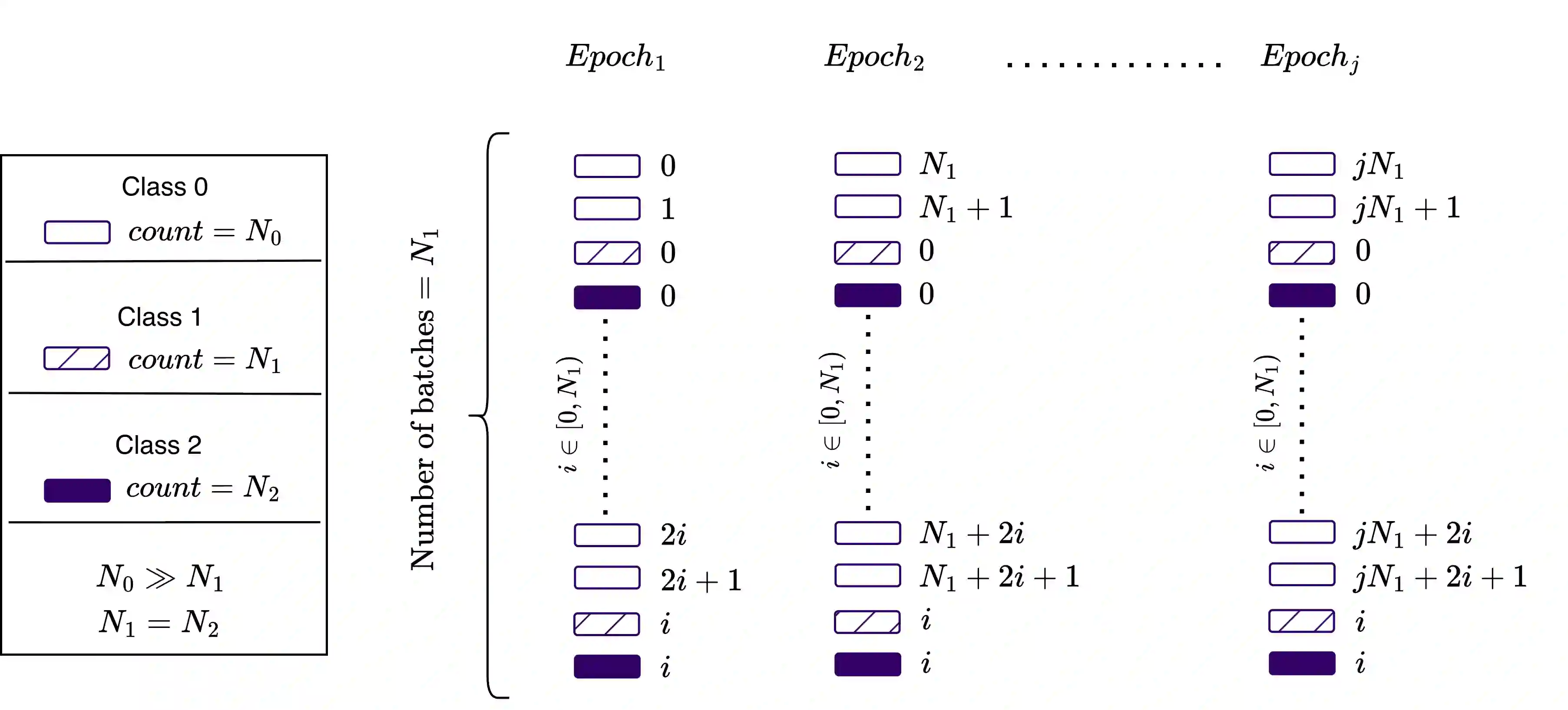
Assessing the severity of artifacts in pediatric brain Magnetic Resonance Imaging (MRI) is critical for diagnostic accuracy, especially in low-field systems where the signal-to-noise ratio is reduced. Manual quality assessment is time-consuming and subjective, motivating the need for robust automated solutions. In this work, we propose BRIQA (Balanced Reweighting in Image Quality Assessment), which addresses class imbalance in artifact severity levels. BRIQA uses gradient-based loss reweighting to dynamically adjust per-class contributions and employs a rotating batching scheme to ensure consistent exposure to underrepresented classes. Through experiments, no single architecture performs best across all artifact types, emphasizing the importance of architectural diversity. The rotating batching configuration improves performance across metrics by promoting balanced learning when combined with cross-entropy loss. BRIQA improves average macro F1 score from 0.659 to 0.706, with notable gains in Noise (0.430), Zipper (0.098), Positioning (0.097), Contrast (0.217), Motion (0.022), and Banding (0.012) artifact severity classification. The code is available at https://github.com/BioMedIA-MBZUAI/BRIQA.
翻译:评估儿科脑部磁共振成像(MRI)中伪影的严重程度对于诊断准确性至关重要,尤其是在信噪比降低的低场强系统中。手动质量评估耗时且主观,这促使了对稳健自动化解决方案的需求。在本研究中,我们提出了BRIQA(图像质量评估中的平衡重加权),该方法解决了伪影严重程度等级中的类别不平衡问题。BRIQA采用基于梯度的损失重加权来动态调整每个类别的贡献,并采用轮转批次方案以确保对代表性不足类别的持续曝光。实验表明,没有单一架构在所有伪影类型上表现最佳,这强调了架构多样性的重要性。轮转批次配置与交叉熵损失结合时,通过促进平衡学习,提升了各项指标的性能。BRIQA将平均宏观F1分数从0.659提高到0.706,在噪声(0.430)、拉链伪影(0.098)、定位(0.097)、对比度(0.217)、运动(0.022)和带状伪影(0.012)的严重程度分类上取得了显著提升。代码可在 https://github.com/BioMedIA-MBZUAI/BRIQA 获取。




相关内容




 微信扫码咨询专知VIP会员