

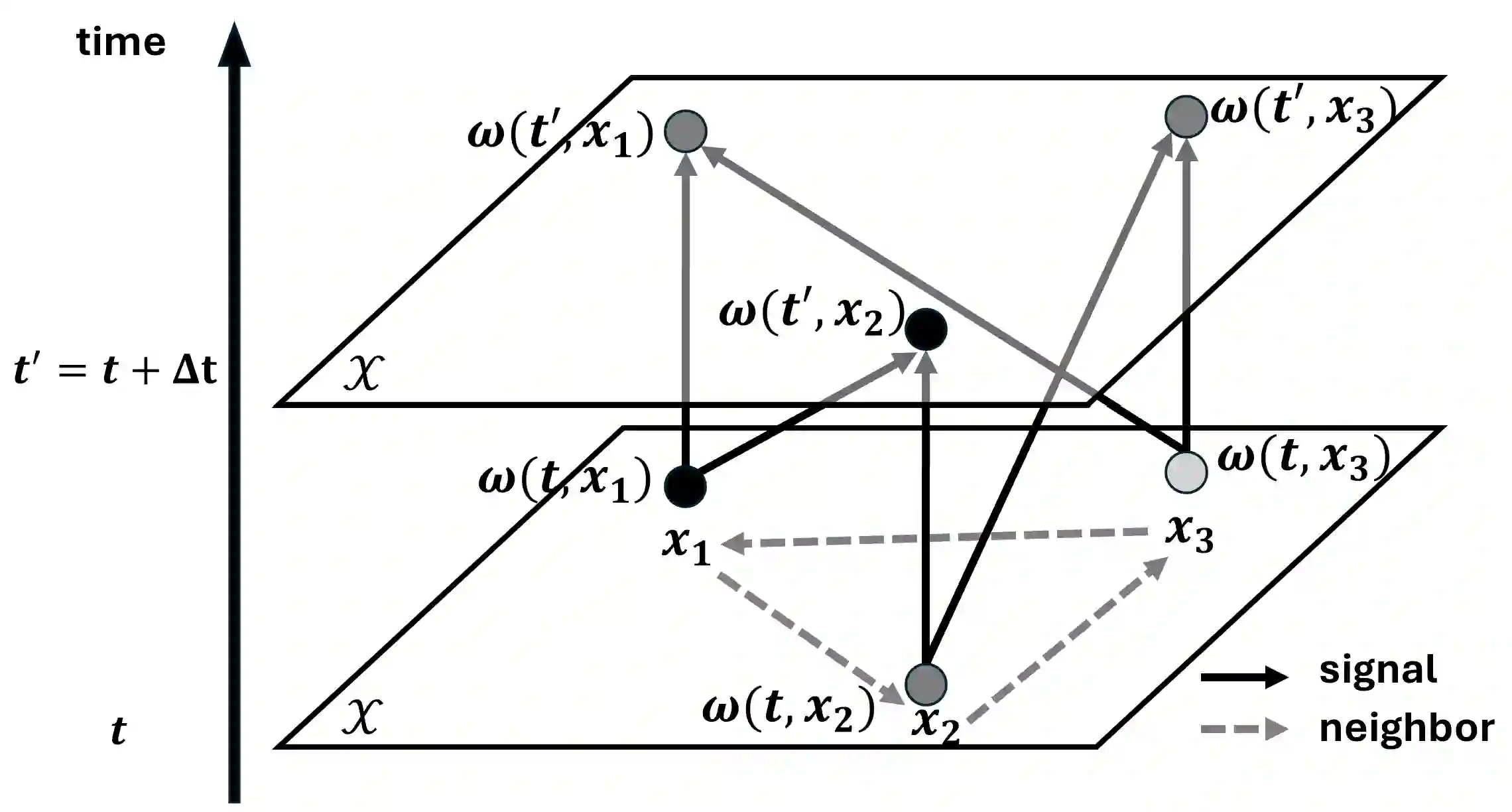
Fields offer a versatile approach for describing complex systems composed of interacting and dynamic components. In particular, some of these dynamical and stochastic systems may exhibit goal-directed behaviors aimed at achieving specific objectives, which we refer to as $\textit{intelligent fields}$. However, due to their inherent complexity, it remains challenging to develop a formal theoretical description of such systems and to effectively translate these descriptions into practical applications. In this paper, we propose three fundamental principles to establish a theoretical framework for understanding intelligent fields: complete configuration, locality, and purposefulness. Moreover, we explore methodologies for designing such fields from the perspective of artificial intelligence applications. This initial investigation aims to lay the groundwork for future theoretical developments and practical advances in understanding and harnessing the potential of such objective-driven dynamical stochastic fields.
翻译:场为描述由相互作用和动态组分构成的复杂系统提供了一种灵活的方法。特别地,其中一些动态随机系统可能表现出旨在实现特定目标的目的导向行为,我们称之为智能场。然而,由于其固有的复杂性,为此类系统建立形式化的理论描述并将其有效转化为实际应用仍具挑战性。本文提出三个基本原则以构建理解智能场的理论框架:完全构型、局部性和目的性。此外,我们从人工智能应用的角度探讨了设计此类场的方法论。这项初步研究旨在为未来理解和利用此类目标驱动的动态随机场潜力的理论发展与实际进展奠定基础。




相关内容





 微信扫码咨询专知VIP会员