

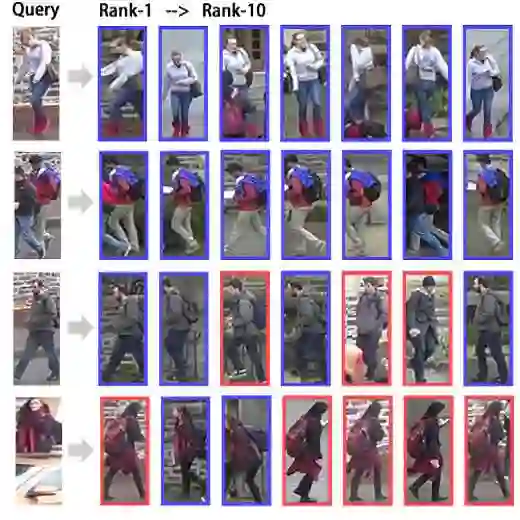
Person re-identification (ReId), a crucial task in surveillance, involves matching individuals across different camera views. The advent of Deep Learning, especially supervised techniques like Convolutional Neural Networks and Attention Mechanisms, has significantly enhanced person Re-ID. However, the success of supervised approaches hinges on vast amounts of annotated data, posing scalability challenges in data labeling and computational costs. To address these limitations, recent research has shifted towards unsupervised person re-identification. Leveraging abundant unlabeled data, unsupervised methods aim to overcome the need for pairwise labelled data. Although traditionally trailing behind supervised approaches, unsupervised techniques have shown promising developments in recent years, signalling a narrowing performance gap. Motivated by this evolving landscape, our survey pursues two primary objectives. First, we review and categorize significant publications in supervised person re-identification, providing an in-depth overview of the current state-of-the-art and emphasizing little room for further improvement in this domain. Second, we explore the latest advancements in unsupervised person re-identification over the past three years, offering insights into emerging trends and shedding light on the potential convergence of performance between supervised and unsupervised paradigms. This dual-focus survey aims to contribute to the evolving narrative of person re-identification, capturing both the mature landscape of supervised techniques and the promising outcomes in the realm of unsupervised learning.
翻译:行人重识别作为监控领域的一项关键任务,涉及跨不同摄像机视角的个体匹配。深度学习技术的兴起,特别是卷积神经网络和注意力机制等监督学习方法,显著提升了行人重识别的性能。然而,监督方法的成功依赖于大量标注数据,在数据标注和计算成本方面存在可扩展性挑战。为应对这些局限,近期研究逐渐转向无监督行人重识别。通过利用丰富的未标注数据,无监督方法旨在摆脱对成对标注数据的依赖。尽管传统上无监督方法性能落后于监督方法,但近年来的发展显示出令人瞩目的进展,表明两者间的性能差距正在缩小。基于这一发展趋势,本综述聚焦两个主要目标:首先,我们对监督式行人重识别的重要文献进行回顾与分类,深入概述当前技术现状,并指出该领域进一步提升的空间已十分有限;其次,我们系统梳理过去三年无监督行人重识别的最新进展,揭示新兴技术趋势,并探讨监督与无监督范式性能趋同的可能性。这项双焦点综述旨在推动行人重识别领域的发展脉络,既涵盖监督技术的成熟格局,也展现无监督学习领域的广阔前景。




相关内容



 微信扫码咨询专知VIP会员