

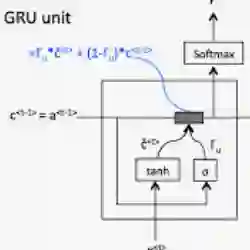
Spike-based temporal messaging enables SNNs to efficiently process both purely temporal and spatio-temporal time-series or event-driven data. Combining SNNs with Gated Recurrent Units (GRUs), a variant of recurrent neural networks, gives rise to a robust framework for sequential data processing; however, traditional RNNs often lose local details when handling long sequences. Previous approaches, such as SpikGRU, fail to capture fine-grained local dependencies in event-based spatio-temporal data. In this paper, we introduce the Convolutional Spiking GRU (CS-GRU) cell, which leverages convolutional operations to preserve local structure and dependencies while integrating the temporal precision of spiking neurons with the efficient gating mechanisms of GRUs. This versatile architecture excels on both temporal datasets (NTIDIGITS, SHD) and spatio-temporal benchmarks (MNIST, DVSGesture, CIFAR10DVS). Our experiments show that CS-GRU outperforms state-of-the-art GRU variants by an average of 4.35%, achieving over 90% accuracy on sequential tasks and up to 99.31% on MNIST. It is worth noting that our solution achieves 69% higher efficiency compared to SpikGRU. The code is available at: https://github.com/YesmineAbdennadher/CS-GRU.
翻译:基于脉冲的时间消息传递使得脉冲神经网络能够高效处理纯时间序列和时空时间序列或事件驱动数据。将脉冲神经网络与门控循环单元(一种循环神经网络的变体)相结合,为序列数据处理提供了一个鲁棒的框架;然而,传统循环神经网络在处理长序列时往往会丢失局部细节。先前的方法,如SpikGRU,未能捕捉基于事件的时空数据中的细粒度局部依赖关系。本文介绍了卷积脉冲门控循环单元(CS-GRU)单元,它利用卷积操作来保留局部结构和依赖关系,同时将脉冲神经元的时间精度与门控循环单元的高效门控机制相结合。这种多功能架构在时间数据集(NTIDIGITS、SHD)和时空基准测试(MNIST、DVSGesture、CIFAR10DVS)上均表现出色。我们的实验表明,CS-GRU平均优于最先进的门控循环单元变体4.35%,在序列任务上达到超过90%的准确率,在MNIST上最高达到99.31%。值得注意的是,我们的解决方案相比SpikGRU实现了69%的效率提升。代码可在以下网址获取:https://github.com/YesmineAbdennadher/CS-GRU。




相关内容




 微信扫码咨询专知VIP会员